
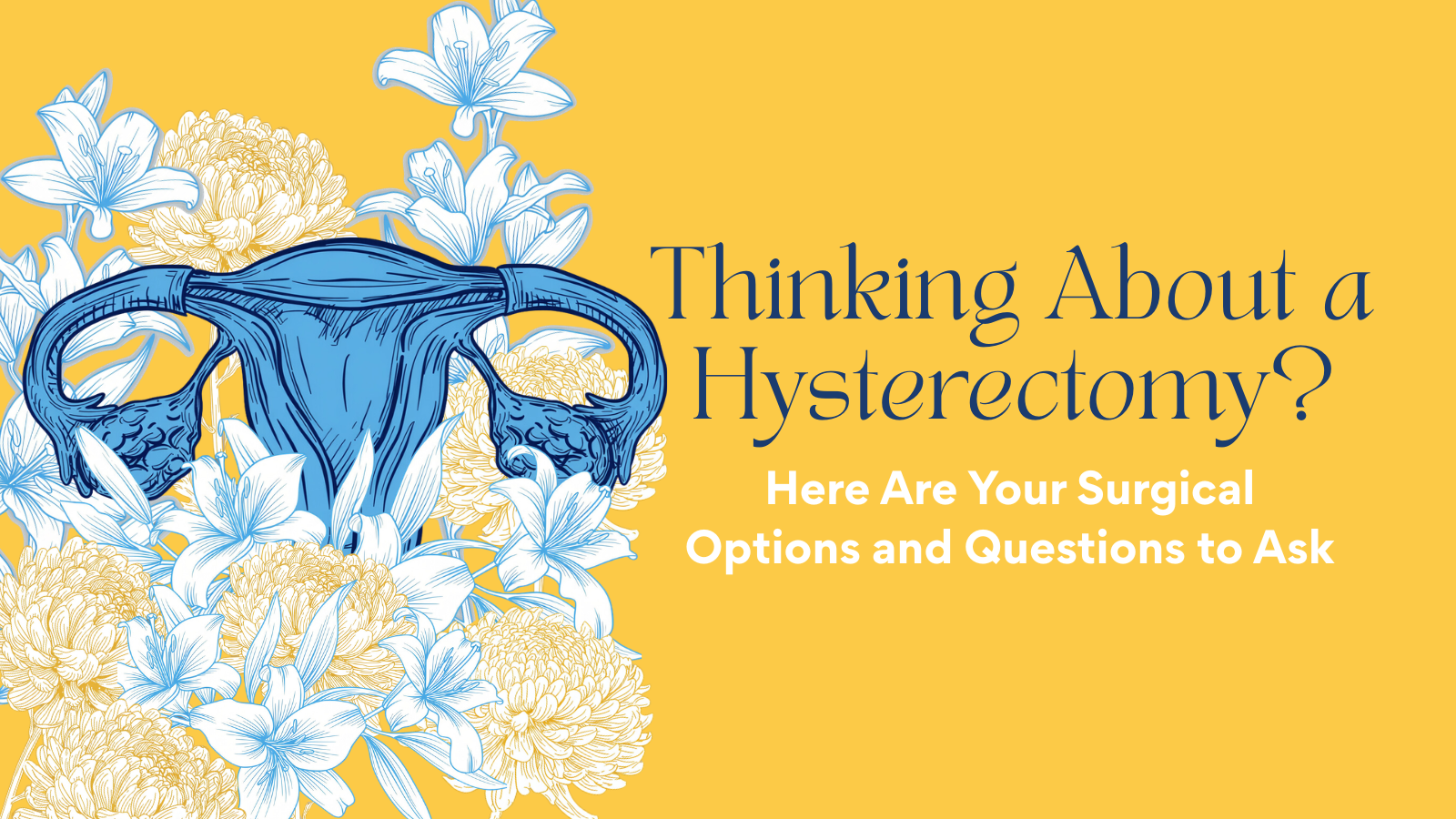
If you’ve been told you might need a hysterectomy—or you’re exploring options—it’s normal to have a lot of questions. The good news is that hysterectomy is not “one-size-fits-all.” Today, there are multiple surgical approaches, and your best option depends on your anatomy, your health history, the reason for surgery, and your OBGYN’s expertise.
Here’s an overview of hysterectomy, why you may need one, and hysterectomy options.
What is a hysterectomy?
A hysterectomy is surgery to remove the uterus. Depending on your medical needs, your OBGYN may also recommend removing other structures:
- Cervix (the lower part of the uterus)
- Fallopian tubes (often removed to reduce future ovarian cancer risk)
- Ovaries (sometimes removed, sometimes preserved)
Common terms you may hear:
- Total hysterectomy: uterus + cervix removed
- Supracervical (partial) hysterectomy: uterus removed, cervix left in place
- Hysterectomy with salpingectomy: uterus removed + fallopian tubes removed
- Hysterectomy with oophorectomy: ovaries removed (one or both)
Why have a hysterectomy?
A hysterectomy may be recommended for:
- Heavy or abnormal bleeding that doesn’t improve with other treatments
- Fibroids
- Endometriosis or adenomyosis
- Chronic pelvic pain
- Uterine prolapse
- Precancer or cancer of the uterus/cervix/ovaries
Your main hysterectomy options
The most common hysterectomy options are:
- Laparoscopic hysterectomy (including robot-assisted)
- Abdominal (open) hysterectomy
- Vaginal hysterectomy
- vNOTES hysterectomy (vaginal + laparoscopic technology through the vagina)
Here’s a breakdown of each.
1) Laparoscopic hysterectomy (small incisions on the abdomen, performed with or without robotics)
What it is: Your OBGYN uses a camera and instruments inserted through small abdominal incisions (often 3–5 small cuts). The uterus is removed in a controlled way—sometimes through the vagina.
Benefits:
- Minimally invasive approach with smaller incisions
- Often less pain and quicker recovery than open surgery
- Excellent visualization of the pelvis—helpful for conditions like endometriosis. This is particularly true with robotic technology.
Considerations:
- Requires specialized training and equipment
- As with any surgery, there’s a small risk of bleeding, infection, or injury to surrounding organs
2) Abdominal (open) hysterectomy
What it is: The uterus is removed through a larger incision in the abdomen (similar to a C-section incision or a vertical incision, depending on the case).
When it’s used:
- Very large uterus or large fibroids
- Significant scarring/adhesions from prior surgeries
- Certain cancers or complex cases where open access is safest
- When minimally invasive approaches aren’t appropriate
Tradeoffs:
- Longer recovery compared to minimally invasive approaches
- More post-op discomfort and a larger scar
- Often will require a short stay in the hospital
3) Vaginal hysterectomy (no abdominal incisions)
What it is: The uterus is removed through the vagina. There are no cuts on the belly.
Why some people love it:
- No visible abdominal scars
- Often less pain and a faster recovery than open surgery
- Frequently a strong option for uterine prolapse and some benign conditions
Possible limitations:
- May not be ideal if the uterus is very large (for example, very large fibroids)
- Prior surgeries, scar tissue, or certain anatomy can make it harder
- Not always the best approach if additional procedures are needed in the pelvis
4) vNOTES hysterectomy
What it is: vNOTES stands for vaginal natural orifice transluminal endoscopic surgery. Your OBGYN accesses the surgical area through the vagina and uses a camera and laparoscopic instruments—but without abdominal incisions.
Why it might be a fit for you:
- No belly incisions (no visible abdominal scars)
- Often less pain and a quicker return to normal activity for many patients
- Combines the cosmetic benefit of vaginal surgery with the visualization advantages of laparoscopy
Who might be a good candidate:
- Many patients needing hysterectomy for benign conditions (like bleeding, fibroids within certain size ranges, adenomyosis)
- Some patients who want a minimally invasive approach but prefer to avoid abdominal incisions
Who might not be a candidate:
- Some patients with extensive scar tissue/adhesions
- Certain complex anatomy or very large uteruses
- Some cancer-related cases (approach is individualized)
How do OBGYNs decide which approach is best?
Your OBGYN may consider:
- Reason for surgery (benign vs. cancer concern)
- Uterine size (fibroids can affect this)
- History of prior abdominal or pelvic surgeries
- Endometriosis or suspected adhesions
- Need to remove ovaries, tubes, or treat other pelvic issues
- Your overall health (including BMI, diabetes control, anesthesia risk)
- Surgeon experience and available techniques
What can I expect for recovery?
Recovery varies by approach and your individual health, but broadly:
- Minimally invasive approaches (vaginal, laparoscopic/robotic, vNOTES): often quicker return to normal routines and less pain
- Open abdominal approach: typically longer recovery time
No matter the approach, most patients are advised to avoid heavy lifting and vaginal intercourse for a set period while healing. Your OBGYN will give you specific instructions.
Frequently Asked Questions About Hysterectomy: Bring to Your Appointment
- What are the different types of hysterectomy?
- What are the main surgical approaches for hysterectomy?
- How do I know which approach is right for me?
- Will my ovaries be removed? What does that change? Pros and cons of keeping?
- How long is recovery, and when can I return to work/exercise?
- What questions should I ask my OBGYN?
- What is the plan for pain control and recovery?
Key takeaways
There are several safe and effective ways to perform a hysterectomy. Many patients can choose a minimally invasive approach and get back to work and family with minimal amount of down time for healing.
Our Premier Women’s Health team can help you weigh your options. Visit premierwomenshealthmn.com for a location or provider near you.
Blog content review by OBGYN physician Katie Toft, MD and physician assistant Becky Roverud.