
Why the Holidays Affect Hormones
The holiday season can be joyful — and demanding. Between social events, family expectations, disrupted routines, financial stress, rich foods, and colder, darker days, many women notice their bodies feel “off” this time of year. And there’s a medical reason: the holidays can influence hormones at every age and stage, from PMS to menopause. Here’s what’s happening — and how to feel more balanced this season.
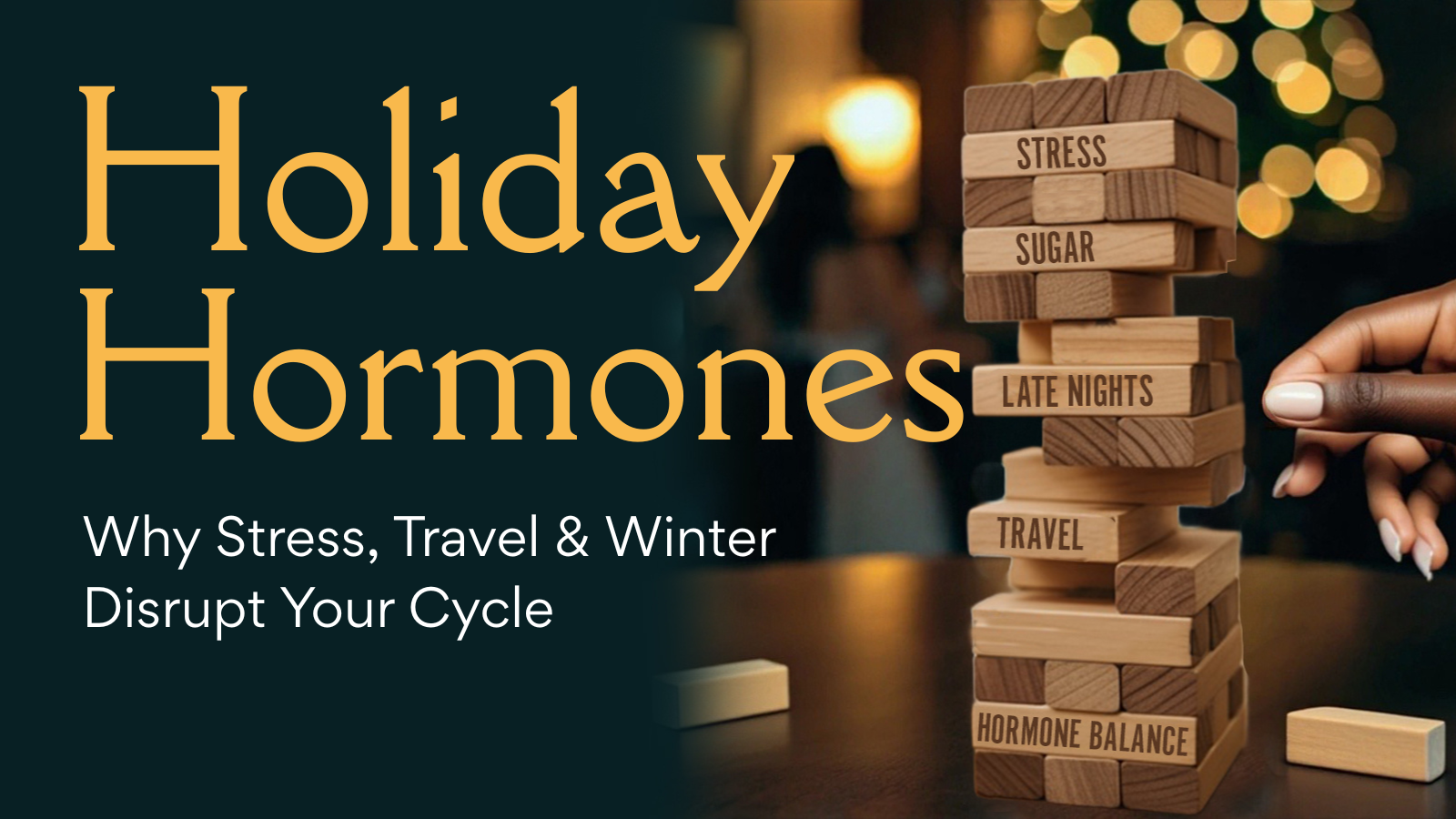
Several seasonal shifts happen at the same time in November and December:
- Rich holiday foods and alcohol → can trigger inflammation, hot flashes, and bloating.
- More stress → increases cortisol, which interferes with estrogen and progesterone balance
- Travel and schedule changes → throw off sleep and cortisol-melatonin cycles
- Shorter daylight hours → reduce serotonin and vitamin D, affecting mood and energy
In other words: it’s not you. Your body is responding to a perfect storm of hormonal influences.
How Hormones-Run-Amok Shows Up in Different Life Stages
If You Experience PMS or PMDD
Stress and sleep loss can intensify:
- Cramps and headaches
- Mood swings or irritability
- Breast tenderness
- Cravings and bloating
- Fatigue or tearfulness
Why: Cortisol competes with progesterone, making PMS symptoms more noticeable. Helpful supports:
- Keep caffeine + alcohol in check when close to your period
- Magnesium glycinate at bedtime may ease anxiety and cramps (talk to your provider)
- Aim for consistent sleep, even when traveling
If You’re Pregnant or Postpartum
Holiday changes can amplify:
- Nausea or reflux
- Swelling
- Fatigue
- Bladder sensitivity
- Emotional ups and downs
Why: Late-night events, salty foods, and travel strain a body already working overtime. Helpful supports:
- Prioritize hydration
- Light movement during travel (walk breaks, ankle circles)
- Have a “graceful exit plan” for gatherings if you need rest
If You’re in Perimenopause
You might notice:
- Hot flashes that feel worse in warm rooms
- Sleep disturbances
- Mood swings or anxiety
- Irregular periods
- Bloating or breast tenderness
Why: Hormones fluctuate even more when sleep and stress are disrupted. Helpful supports:
- Wear layers to parties so you can cool off
- Limit alcohol — a top hot flash trigger
- Keep sleep and meal timing as consistent as possible
If You’re in Menopause
Hot flashes, night sweats, bladder sensitivity, and mood shifts can flare.
Why: Holiday patterns (alcohol, sugar, stress, late nights) activate the nervous system, which can worsen vasomotor symptoms and sleep. Helpful supports:
- Aim for alcohol-free nights between events
- Cooling bedding or pajamas for sleep
- Deep-breathing exercises before bed to reduce nervous-system overdrive
A Season of Joy — and Permission to Rest
Women often carry the emotional and logistical load of the holidays. If your body needs:
- More rest
- More hydration
- Fewer commitments
- Earlier nights
- Lower expectations
That’s not weakness — that’s listening to your physiology.
When to Reach Out to Your OBGYN Provider
Check in with your Premier OBGYN or women’s health provider if you’re experiencing:
- PMS or period symptoms that feel unmanageable
- Irregular periods that last more than a few months
- Hot flashes or night sweats that disrupt sleep or daily life
- Bladder leakage or urgency that’s affecting your confidence
- Mood changes that feel heavier than usual
Hormonal changes are common this winter — but you don’t have to struggle through them. There are evidence-based treatments and lifestyle supports at every stage of a woman’s life.
A Final Word
If you’re feeling “off” this month, you’re not failing at the holidays — your hormones are responding to stress, daylight shifts, and seasonal rhythms. With rest, nourishment, and support, you can protect your peace and your health this winter.