
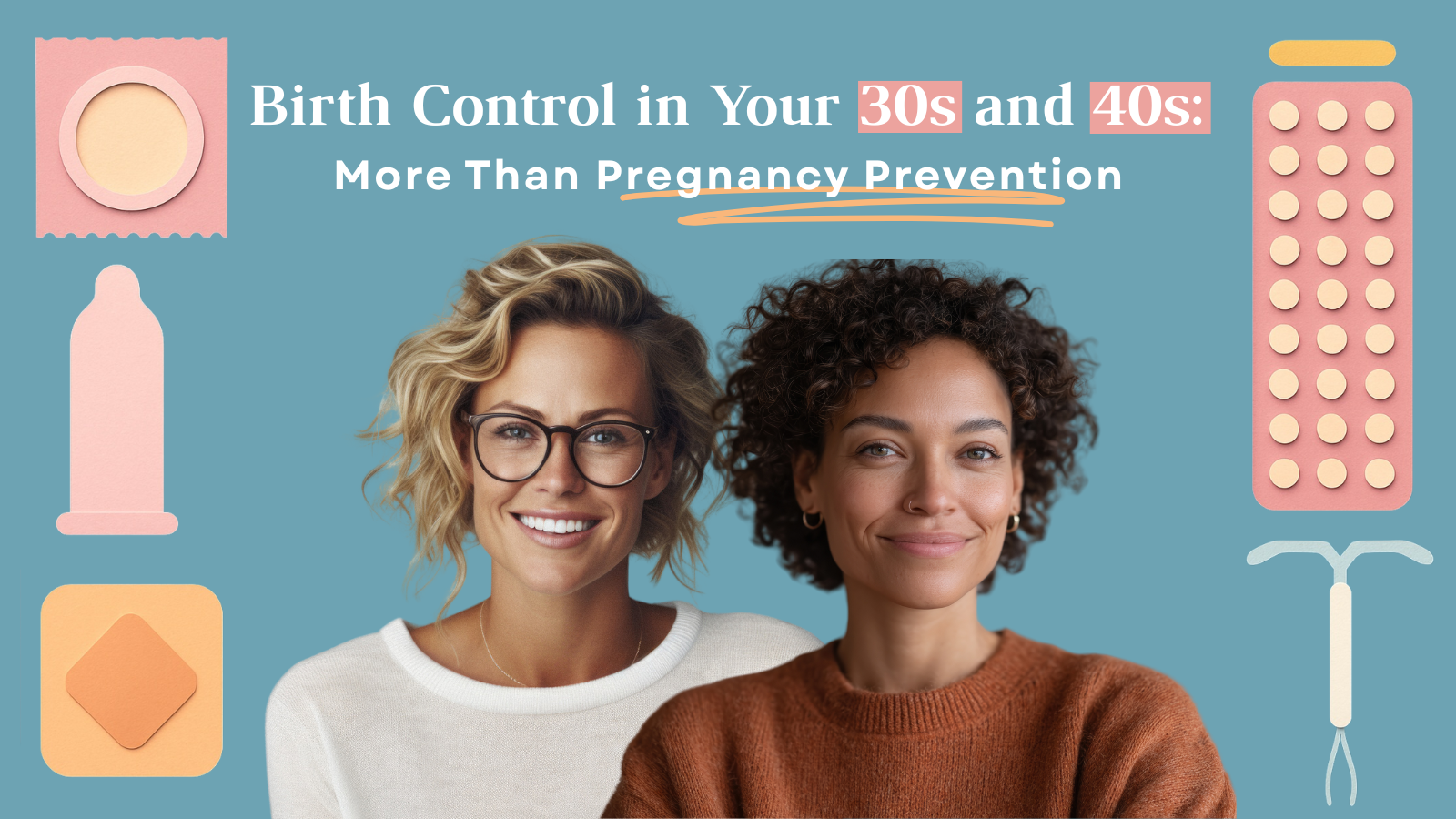
Why Contraception Still Matters in Your 30s and 40s
For many women, birth control conversations start in their teens or 20s—but decisions made about birth control in your 30s and 40s can be just as important. Fertility declines with age, but it doesn’t disappear until menopause, meaning unplanned pregnancies remain a real possibility well into your 40s. At the same time, many women in midlife are juggling career, family and health changes, which can shift birth control needs for preventing pregnancy to helping to manage hormonal changes that come with perimenopause.
The good news? There are safe, effective options tailored to all of these stages of your life.
In your 30s, you may be spacing pregnancies, delaying having children, or finalizing decisions about family size. As you move into your 40s, pregnancy is less common but still possible—and carries higher risks for mom and baby. Reliable birth control works hard at this age: it can prevent surprises while also supporting hormone, menstrual and bone health. Yay!
Birth Control Options to Consider
Long-Acting Reversible Contraception (LARC)
- IUDs (hormonal or copper): More than 99% effective, lasting 3–12 years depending on type. Hormonal IUDs can also reduce heavy bleeding associated with perimenopause.
- Implants: Inserted under the skin of the arm, effective for up to 3 years.
These options are “set it and forget it,” making them ideal for busy women. See our April blog, where we explore long-acting, reversible contraception in depth.
Hormonal Methods
- Pills, patches, and vaginal rings are familiar choices that regulate cycles and ease cramps.
- For women in their 40s, these options may also help control perimenopause symptoms like hot flashes and irregular or heavy bleeding.
- Some health risks (like smoking, high blood pressure, or migraines with aura) may limit use—your OBGYN provider can help weigh risks vs. benefits.
Barrier Methods
- Condoms and diaphragms provide pregnancy prevention and add protection against sexually transmitted infections (STIs), which are still common. Think HPV, genital herpes and chlamydia, which are still common today.
- While less effective on their own, condoms are a great choice when combined with another method.
Permanent Options
- Tubal ligation, also known as salpingectomy or getting your “tubes tied”, is a surgical procedure for women who are certain they don’t want future pregnancies.
- Vasectomy is an equally effective option for male partners and usually involves an easier recovery.
Special Birth Control Considerations in Your 40s
- Heavy bleeding or irregular cycles? A hormonal IUD may ease symptoms while providing reliable protection.
- Perimenopause changes? Hormonal contraceptives can help balance fluctuating hormones and maintain bone health.
- Chronic conditions? High blood pressure, diabetes, migraines, or clotting history may affect which methods are safest.
Common Birth Control Myths in Your 30s and 40s
Myth 1: “Birth control is only about preventing pregnancy.”
Fact: Many women in their 40s use birth control to manage irregular cycles, reduce heavy bleeding, protect bone health, and ease perimenopausal symptoms.
Myth 2: “I don’t need birth control anymore.”
Fact: While fertility does decline in your 40s, pregnancy is still possible until you’ve gone 12 consecutive months without a period (menopause). Unplanned pregnancies can still happen.
Myth 3: “Birth control is unsafe at my age.”
Fact: Many safe options exist for women in their 40s. Your health history (like blood pressure, smoking status, or migraines) matters more than age alone. Non-hormonal methods and lower-dose hormonal options may be a fit.
Myth 4: “I can’t use hormonal birth control if I’m over 40.”
Fact: Hormonal methods—including IUDs, implants, and certain pills—can be safe and effective for many women in their 40s. In fact, some can also help with heavy periods, hot flashes, and perimenopause symptoms.
Myth 5: “Sterilization is my only permanent option.”
Fact: While tubal ligation is one choice, long-acting reversible contraceptives (like IUDs and implants) are highly effective and can last for years—without being permanent.
The Bottom Line on Birth control in Your 30s and 40s
Birth control in your 30s and 40s is about more than avoiding pregnancy—it’s about supporting your health, managing symptoms, and giving you peace of mind. Whether you want a long-term option, symptom relief, or a permanent solution, your provider can help you find the best fit for your body and your goals.
Schedule an appointment to talk through your options—because the right choice at this stage of life can make a big difference in your life for years to come.
This content was reviewed and approved by Taryn McEvoy, MD, Premier Women’s Health-Oakdale OBGYN. 8/24/25